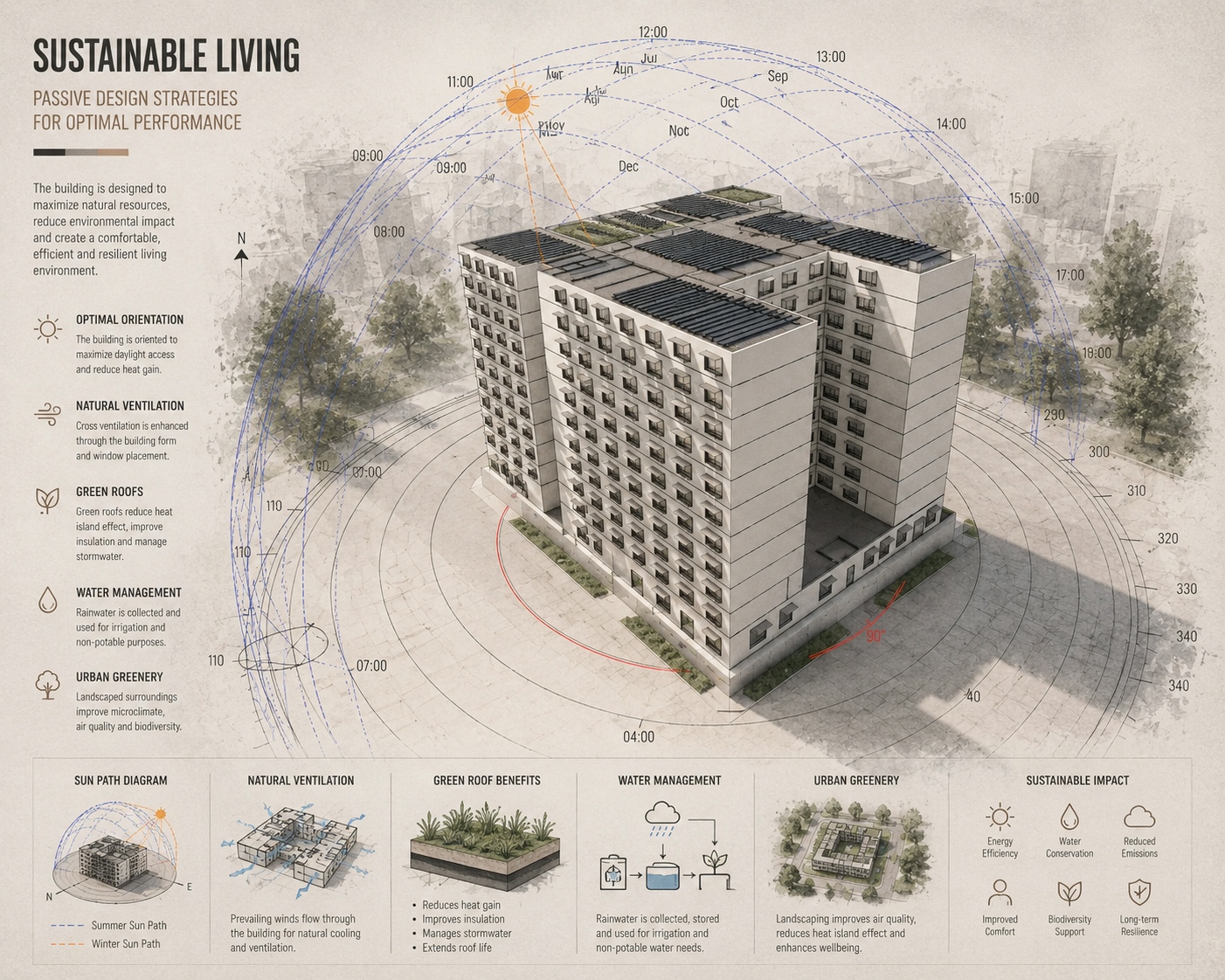
Energy Optimization and Thermal Performance Analysis of a High-Rise Residential Building
Project Location:
Tamil Nadu, India
Year:
2025 – 2026
Climate:
Tropical Hot-Humid Climate
Simulation Tools:
DesignBuilder, EnergyPlus
Architect & Energy Performance Consultant:
Dr. Amirhossein Janzadeh | Rymast Studio
Project Introduction
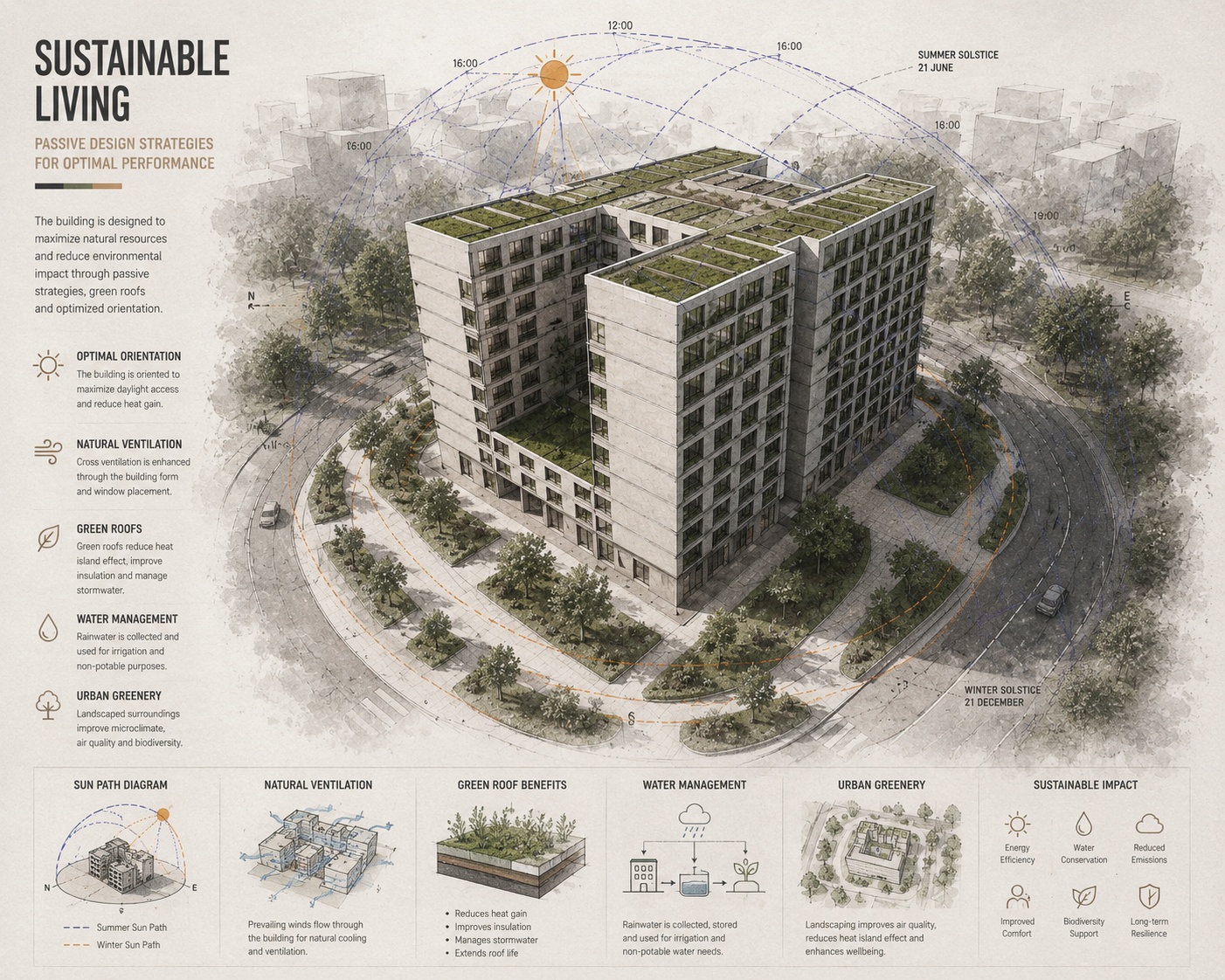
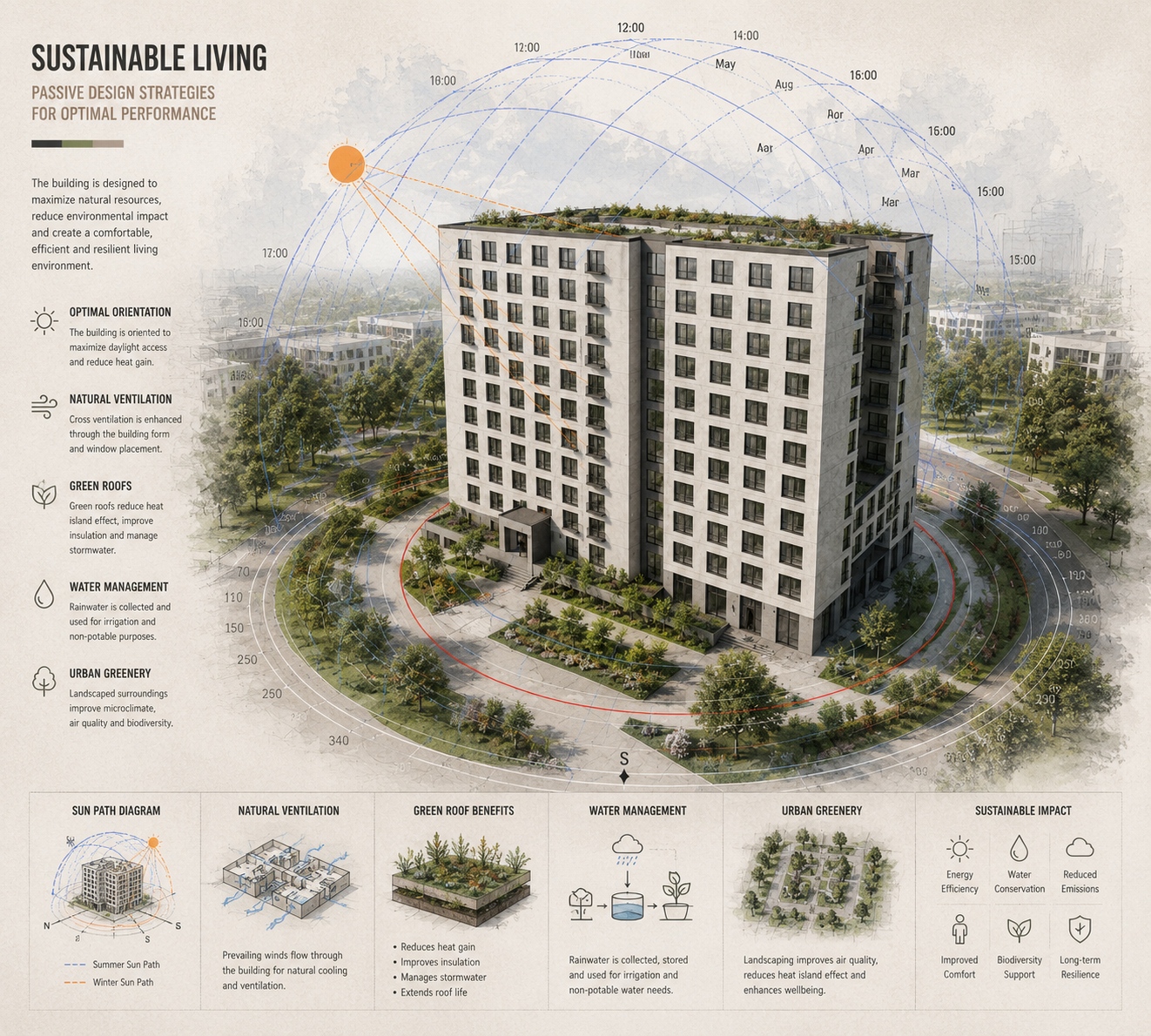
This project was developed with the objective of reducing energy consumption and improving the environmental performance of a high-rise residential building located in Tamil Nadu, India. The primary strategy focused on minimizing building energy demand through passive design approaches, efficient systems, and partially offsetting electricity consumption using rooftop photovoltaic(PV) panels. In this study, the building’s energy demand was first reduced, and the remaining portion was partially compensated through renewable energy generation. This methodology aligns with international green building principles and standards such as ASHRAE 90.1 and LEED.
Main Project Objectives
Reduction of annual building energy consumption
Reduction of cooling loads in a hot-humid climate
Optimization of building envelope performance
Thermal behavior and energy consumption analysis
Improvement of HVAC system efficiency
Integration of solar energy to reduce grid dependency
Enhancement of occupant thermal comfort
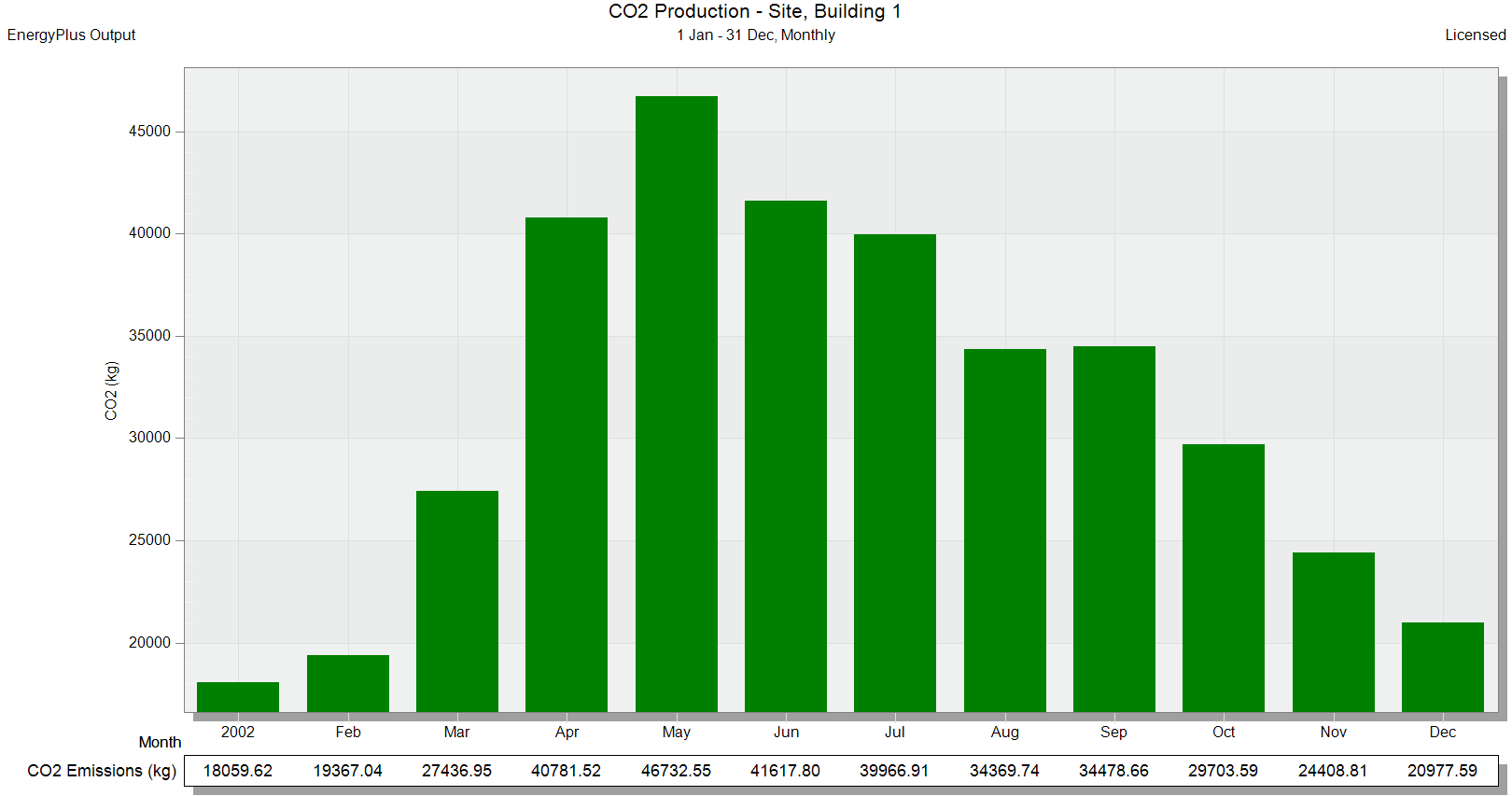
Reduction of CO₂ emissions
Research Method and Simulation Process
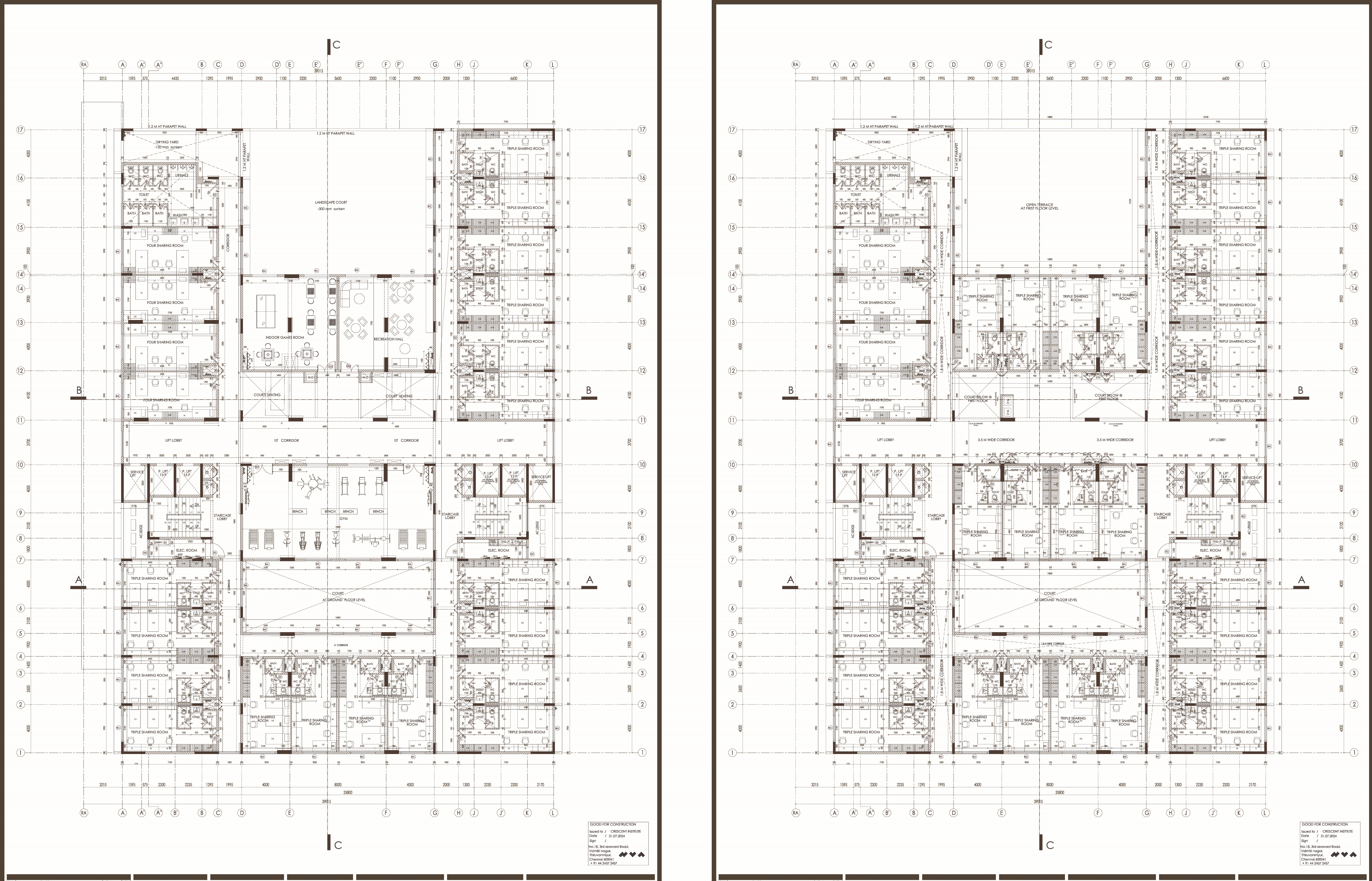
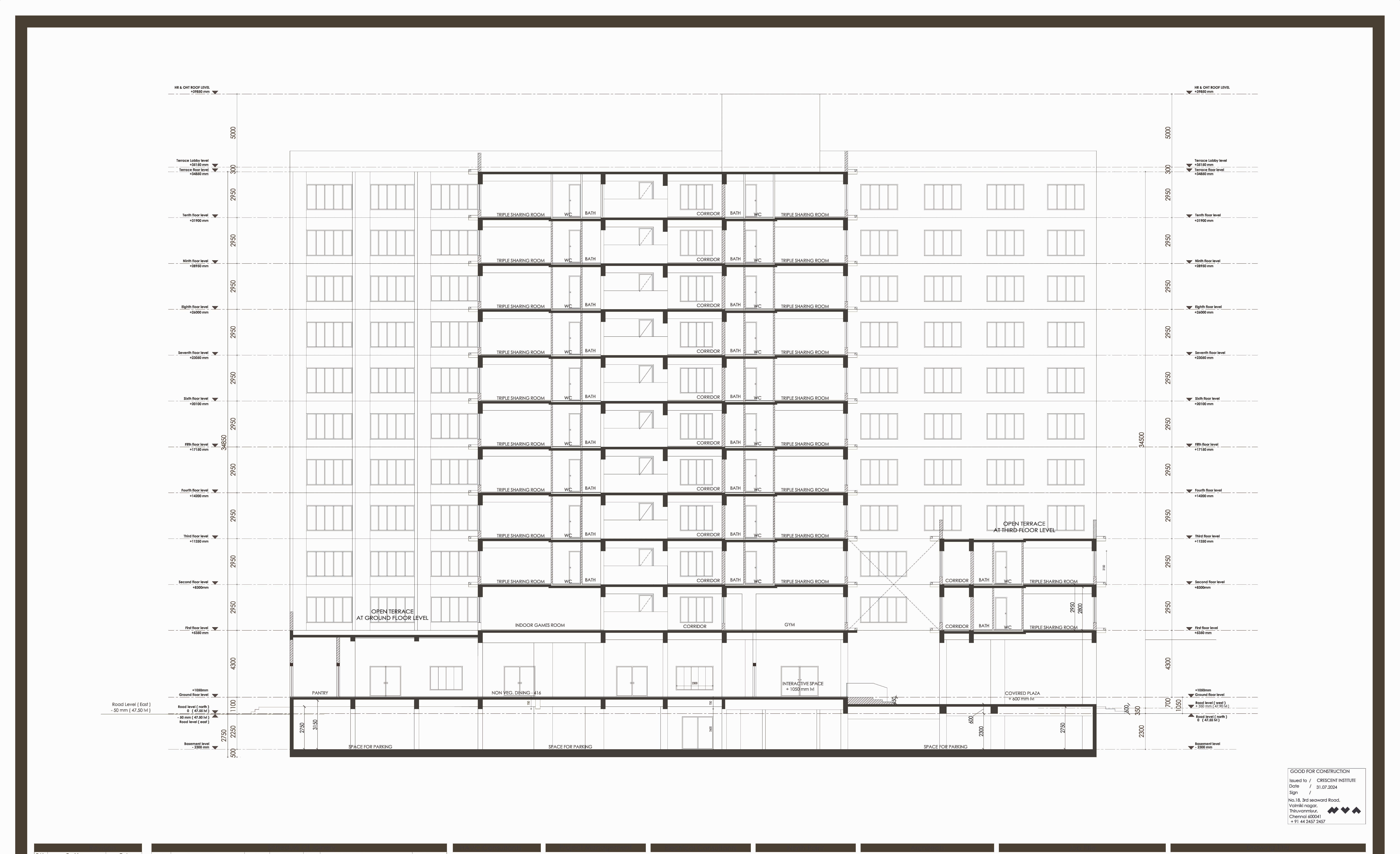
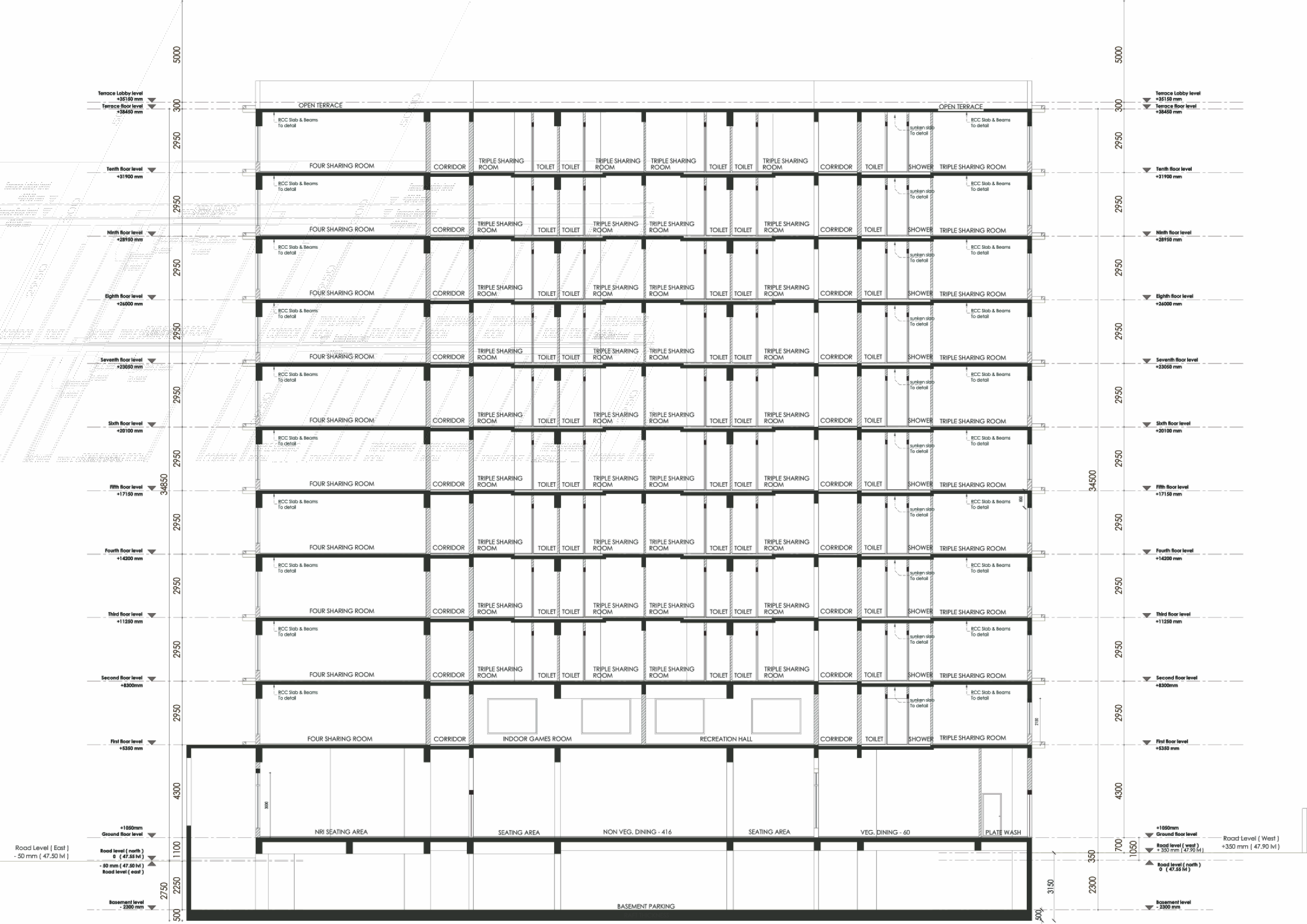
For the energy performance analysis, the building was modeled in DesignBuilder based on the architectural drawings and actual project specifications. All relevant parameters, including construction materials, mechanical systems, occupancy schedules, lighting, ventilation, and openings, were incorporated into the model. The thermal performance and energy consumption analyses were carried out on an annual basis, enabling the evaluation of the building’s behavior under the city’s actual climatic conditions.
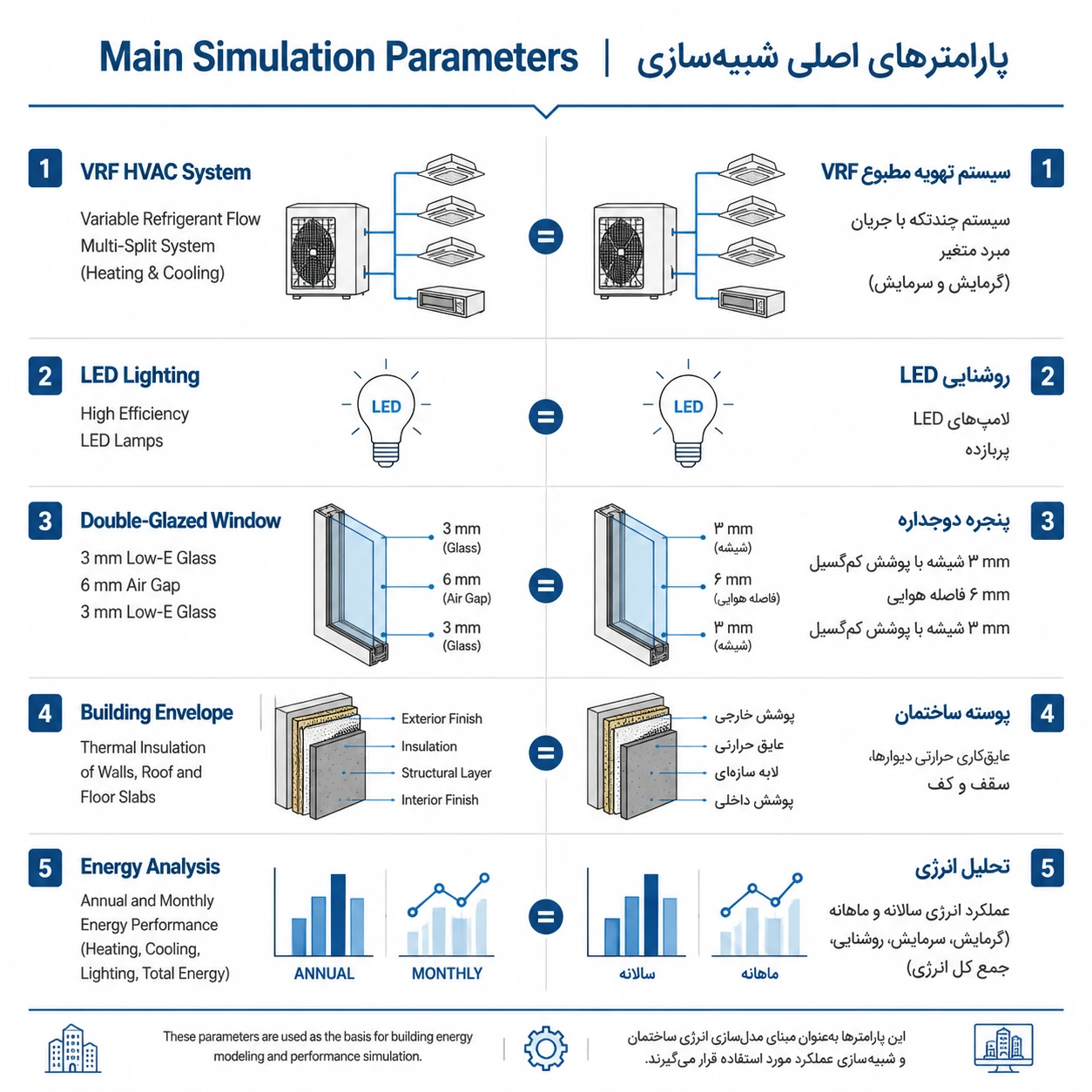
Glazing Type: Double-glazed windows with 3 mm panes and a 6 mm air gap
Building Envelope: Materials selected according to the first-stage design specifications
Energy Analysis: Annual and monthly simulations
Baseline Building Scenario
In the first stage, the building’s energy performance was evaluated based on the initial design specifications. Simulation results indicated that the total annual electricity consumption reached 1.34 GWh.
Key Results:
Total Annual Electricity Consumption: 1.34 GWh/year
Annual Cooling Energy Demand: 903.11 MWh/year
The majority of the energy demand was associated with cooling loads, which is expected in hot-humid climates.
Monthly analysis demonstrated that peak energy consumption occurred during the hottest months of the year, when high outdoor temperatures and humidity significantly increased cooling demand.
Energy Optimization Strategies
1) Building Envelope Optimization;
To reduce heat transfer through the building envelope, double-glazed windows and thermally efficient materials were implemented. Scientific studies indicate that envelope optimization can reduce cooling energy consumption by approximately 15–35%.
2) Use of VRF System;
The VRF system was selected due to its high efficiency, zoning flexibility, and energy recovery capabilities, making it highly suitable for high-rise buildings in hot climates. According to ASHRAE research, VRF systems can provide up to 30% energy savings compared to conventional HVAC systems.
3) Energy-Efficient Lighting;
The implementation of LED lighting reduced electricity consumption and lowered internal heat gains within the building.
4) Rooftop Photovoltaic Panels;
In the final stage, rooftop photovoltaic panels were integrated to offset part of the building’s electricity demand. The system was designed to reduce grid dependency and carbon emissions. Based on scientific data, photovoltaic systems in high solar radiation regions such as southern India can achieve substantial energy generation efficiency.
Thermal Performance Analysis
The thermal analysis revealed that cooling loads represented the dominant portion of the building’s energy consumption.
The main contributing factors included:
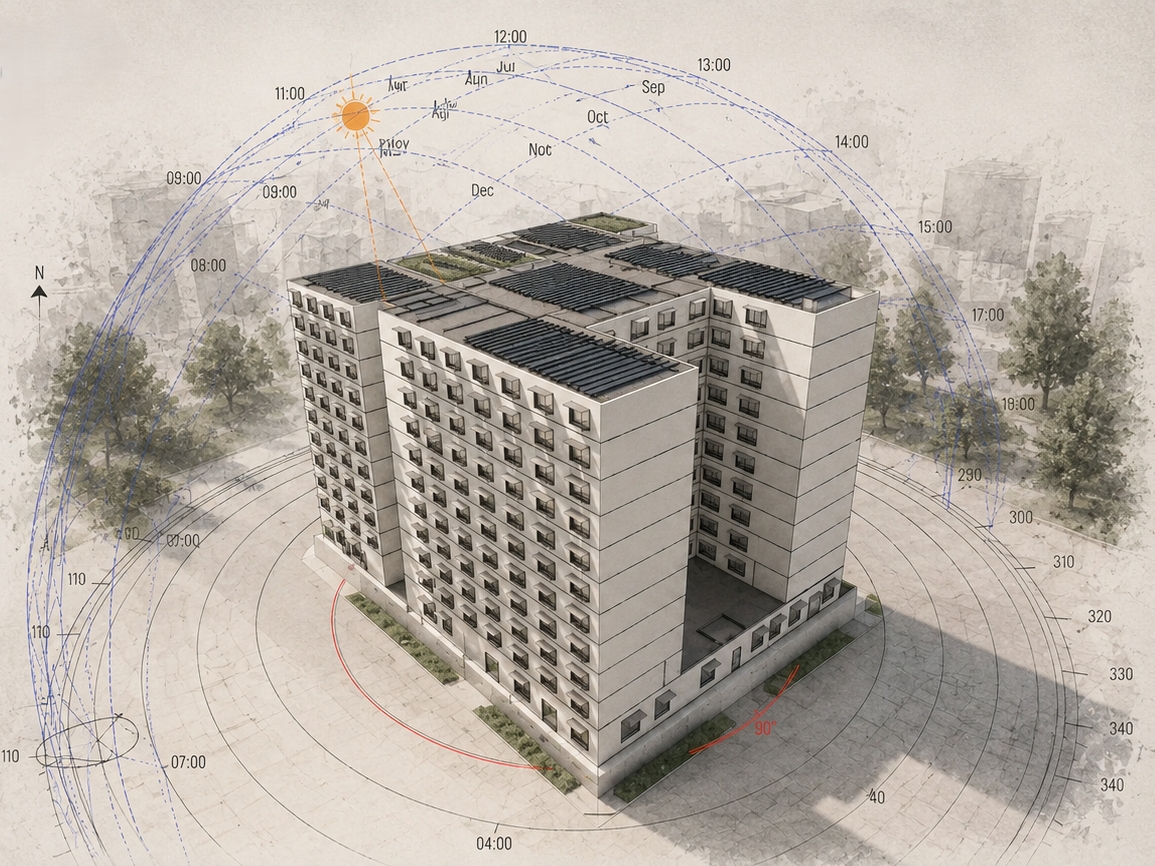
Direct solar radiation on the building envelope
Heat transfer through glazing systems
Internal heat gains from occupants and equipment
High ambient humidity levels
The analyses demonstrated that optimizing the building envelope and implementing efficient mechanical systems can significantly reduce overall energy consumption.
Environmental Benefits
Reduction in electricity consumption
Reduction in greenhouse gas emissions
Reduced dependence on fossil fuels
Improved thermal comfort and indoor environmental quality
Enhanced long-term building sustainability
Project Achievements
Development of a comprehensive energy analysis model for a high-rise building
Demonstration of the effectiveness of passive design in reducing cooling loads
Applicability of the findings to similar hot-humid climate buildings
Reduction of energy demand through integrated passive and active strategies
Provision of a practical pathway toward Net-Zero Energy Buildings
Final Conclusion
The results of this study demonstrated that integrating passive design strategies, high-efficiency mechanical systems, and solar energy can significantly improve the energy performance of high-rise buildings in hot-humid climates.The DesignBuilder simulations revealed that cooling loads accounted for the largest share of energy consumption, and that optimizing the building envelope, implementing VRF systems, and integrating photovoltaic panels could substantially reduce energy use and carbon emissions.
This project represents a practical example of sustainable design in high-rise buildings and can serve as a reference model for future developments in similar climatic regions.
For energy consultancy and sustainable building performance optimization, feel free to contact us.